

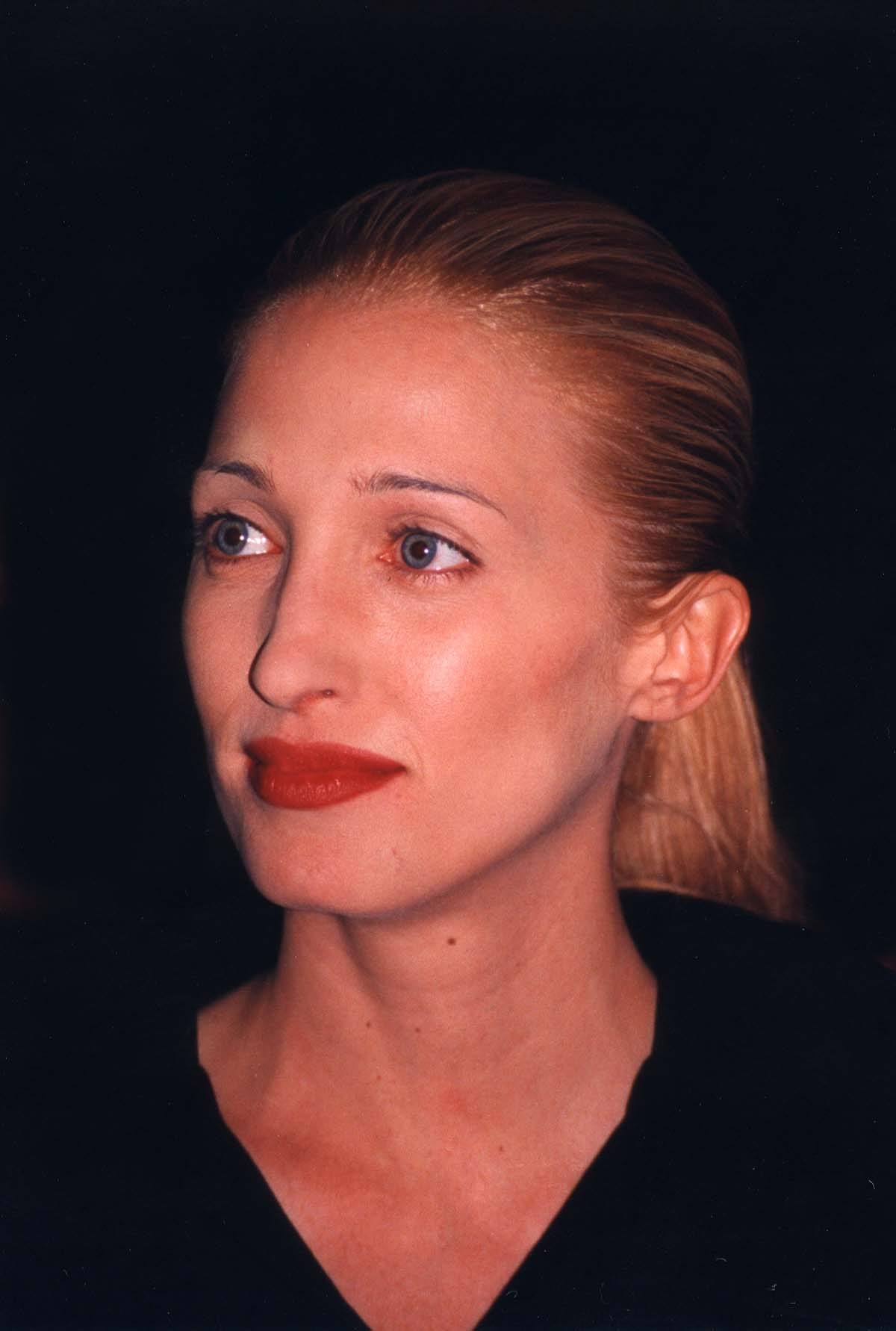
It’s been over a week since I binge-watched Love Story (2026), and I can’t stop thinking about Carolyn Bessette Kennedy.
But, in hindsight, this shouldn’t really surprise me. I went into the series knowing almost nothing about her, and I suspect that’s exactly why she stayed with me. Carolyn has long occupied a particular corner of the internet’s imagination, one populated by grainy paparazzi photographs, oversized camel coats, minimalist wardrobes and endless discussions about effortless style. Like many women, I’ve understood the appeal. I would be lying if I said I hadn’t spent more time than necessary studying photographs of her, trying to identify the elusive quality that seemed to separate Carolyn from every other well-dressed woman of her era.
What surprised me, however, was realising that after ten episodes, it wasn’t the style I was thinking about. It was the privacy.
Beneath the photographs, the headlines and the mythology surrounding her marriage to John Kennedy Jr., I found myself increasingly drawn to the idea of a woman trying to hold on to some part of herself in a world that felt entitled to all of it. Watching the series from the vantage point of 2026, what interested me wasn’t how famous Carolyn became, but how much she seemed to want to maintain some distance between herself and the public, even if it was often a source of tension and unhappiness in her life.
Privacy is something I’ve found myself thinking about differently in recent years.
This may sound ironic coming from someone who writes—and occasionally publicly shitposts—about relationships, heartbreak, astrology and the general chaos of being a person. On paper, I probably appear fairly open. There are essays about my divorce on the internet. There are Instagram stories that should probably have remained inside my Saved folder. There is enough material floating around online for people to feel like they know me.
And yet, the longer I write, the more I’ve come to realise how little correlation there is between disclosure and understanding. Some of the most significant moments of the last few years have never made it into an essay, and some never will—not because they’re secrets, but because not every experience becomes more meaningful once it’s witnessed by an audience. I’ve written publicly about the end of a seventeen-year relationship, and yet some of the people who understand me best know very little about the details. Meanwhile, complete strangers occasionally reach out convinced they know exactly who I am.
I think that’s why Carolyn stayed with me. Not because I recognised myself in her, but because I recognised the instinct. Writing has taught me that privacy isn’t the opposite of honesty. You can tell the truth without telling the whole story. There is a difference between being seen and being known.
I was born in 1990, which means I was too young to be a live witness to the courtship, marriage and tragedy that transformed John Kennedy Jr. and Carolyn Bessette into one of the defining celebrity couples of that age. By the time I encountered them, they already belonged to history. Like many millennials, I inherited them as mythology rather than current events. Their story arrived through photographs, documentaries, magazine retrospectives and the strange digital afterlife reserved for beautiful people who die young.
My Carolyn Bessette isn’t really Carolyn Bessette at all. She’s a collection of images, stories and projections assembled long after the fact.
The same is true of many women who continue to occupy an outsized place in our cultural imagination. Princess Diana. Amy Winehouse. Marilyn Monroe. They remain fixed in time -- for years, popular culture seemed far more comfortable consuming these women who didn’t have the chance (or give themselves the chance) to live out their stories as symbols than engaging with them as people. The symbol remains fixed. The person keeps changing. Whereas women like Britney Spears, Pamela Anderson and Amanda Bynes have had to endure the messier reality of continuing to evolve in public. We have watched them struggle, disappear, re-emerge, contradict themselves and reject old narratives.
Yet for someone who has been so thoroughly mythologised, we know remarkably little about Carolyn compared to almost any public figure today. The series hints that part of this mystery may stem from the fact that John and Carolyn had fundamentally different relationships with public life.
John seems unable to fully detach from public perception. Even as he insists (and is most probably lying) that he doesn’t want a political future, public life hangs over him like an inheritance he can’t quite escape. He seems to have accepted visibility as a condition of his life in a way Carolyn never quite does. Beneath the arguments and frustrations, the series suggests they may have been grappling with something more fundamental: two completely different beliefs about what a public life should look like. One person reluctantly accepting visibility as the cost of who he is. The other continually questioning why visibility should demand quite so much in return.
Their relationship feels like an early version of a question that has since become central to public life: how much of yourself are you required to give away in exchange for relevance?
You can see this playing out in India—and, really, across much of the world—in real time. Politicians are still doing the traditional photo-ops: sharing meals with people from different sections of society, visiting villages, meeting workers and farmers. But increasingly, we’re also learning that they’re trained diving instructors or 5 AM marathon runners. They have favourite books, hobbies, playlists and pets. The public persona is no longer confined to speeches, rallies and policy positions.
These days, you don’t need to be a celebrity to find yourself navigating some version of the same dynamic. The definition of a public figure has expanded far beyond politicians, actors and business leaders. Increasingly, it includes anyone trying to build an audience online.
As someone who spends much of her professional life thinking about public perception, I find this fascinating. I’ve spent close to a decade helping build a brand, and one thing I’ve learned is that people can tell when you’re trying too hard to convince them of something. The harder you insist you’re authentic, the less authentic you appear.
That’s why the current obsession with personal branding sometimes leaves me cold. We are all encouraged to become narrators of our own lives, carefully selecting the details that make us seem interesting, relatable or aspirational. Professionally, I understand why this works. Personally, I find myself resisting it.
The stories we tell about ourselves can be useful. They help other people understand us, and sure, they help us understand ourselves. But they can also become strangely limiting. The moment a story starts working, there is an incentive to keep performing it.
I went into Love Story (2026) expecting to think about the Kennedy legacy, inherited mythologies and one of the most photographed couples of the 1990s. Instead, I found myself thinking about a woman who spent much of her public life pushing back against the idea that visibility should automatically grant access.
Maybe that’s why Carolyn continues to fascinate people nearly three decades later. We know what she looked like. We know what she wore. We know how her story ended.
The rest, we fill in ourselves.
Disclaimer: I use AI as part of my drafting and editing process. The ideas, experiences, perspectives, and final direction of the writing are entirely my own.
Fascinating deep-dive. Makes me wonder how much these images of Caroline, Diana and others are carefully constructed PR versus the reality…